
Each crime, measured against what it happens to
A crime rate is a count divided by something, and the something decides the answer. CrimeGrade divides each crime by what that crime targets, which it calls the crime's ideal denominator.
Why the yardstick decides the answer
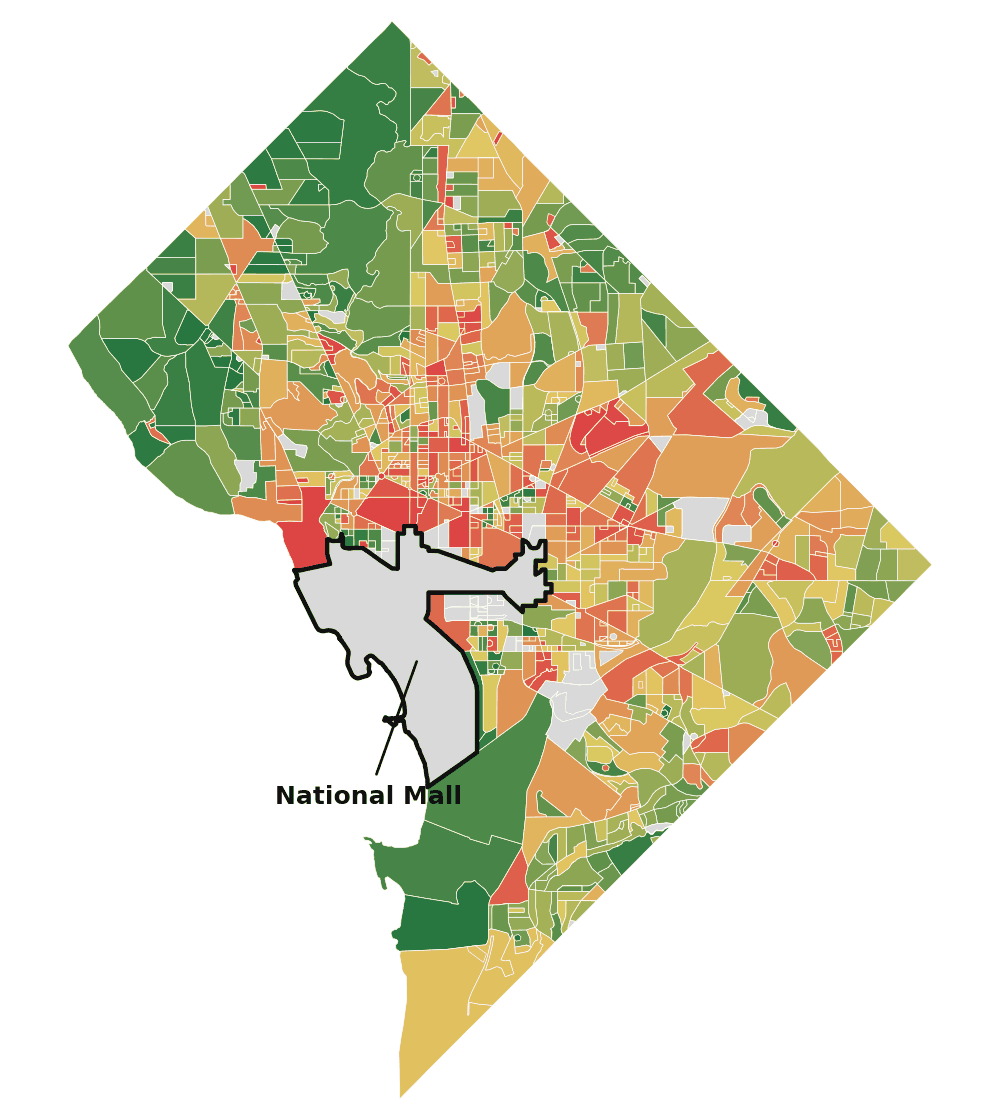
Take a park with 10 crimes a year and 2 residents. Per resident, it reads as one of the most dangerous places in the country. Measured against the thousands of hours visitors spend there, the same 10 crimes describe a safe park.
The same logic holds for a parked car. The risk to a car follows the number of cars parked nearby, so vehicle theft is measured against parking spaces.
A store reads on the risk to the people and cars that are actually there.
Theft per resident
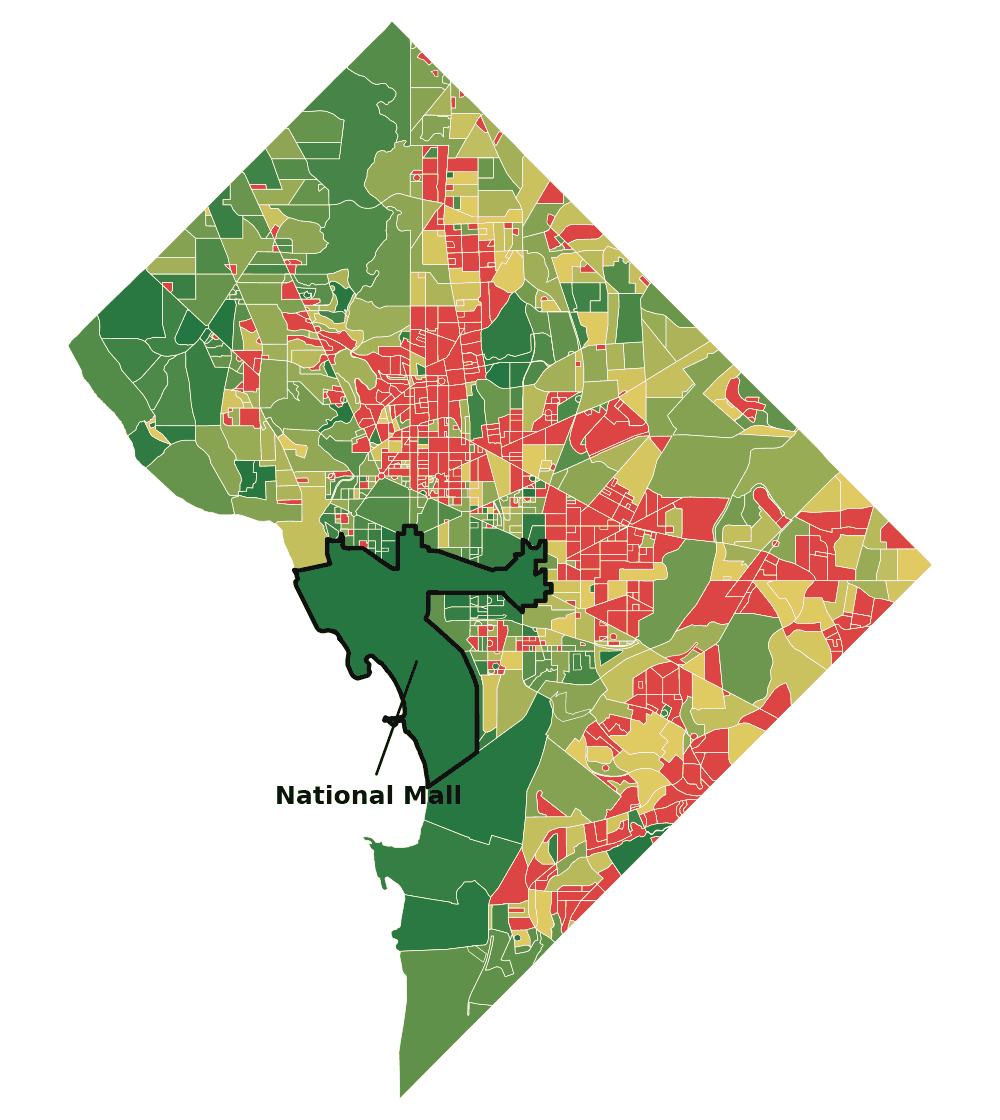
Theft on its ideal denominator
The yardsticks
Each map shows one yardstick across Washington, DC on CrimeGrade's hexagon grid, from fewer (light blue) to more (dark blue). CrimeGrade builds the same layers for every hexagon in the country.
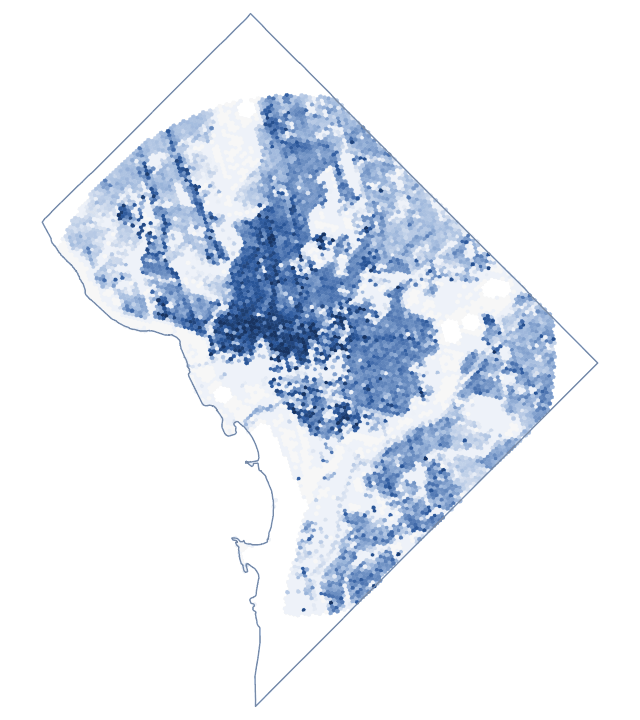
Person-hours
The hours people spend in a place, at home, at work or out in public. Violent crime follows people, so its rate follows where people are, around the clock.
Estimated hour by hour for every hexagon, from where people live, work, shop, study and visit.
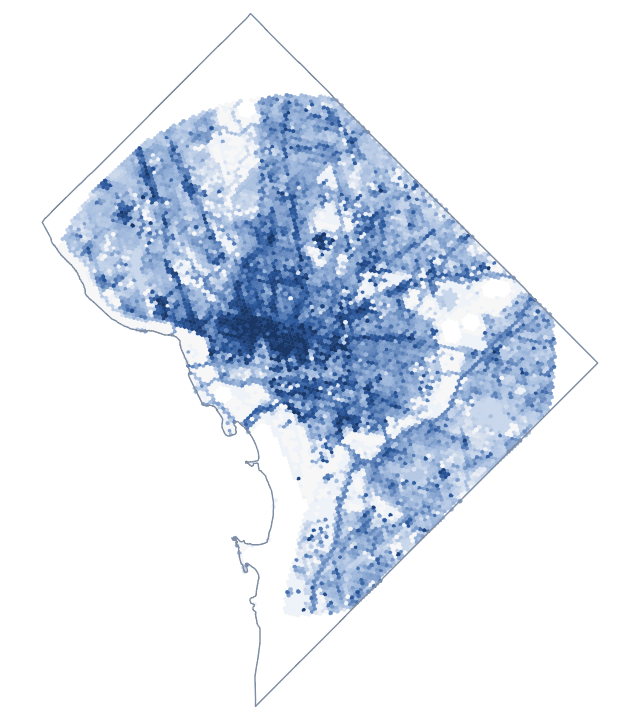
Public person-hours
The hours people spend outside their homes: on the street, at work, in stores and in parks. Street robbery happens in public, so time at home is left out. Robbery of a business is measured per 100 businesses.
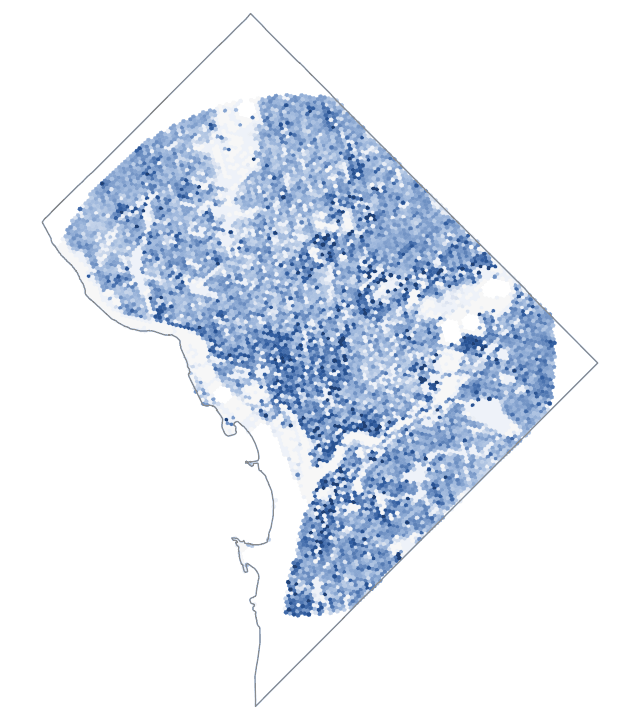
Open parking spaces
The risk to a car follows the cars parked around it. CrimeGrade counts about 1.5 billion parking spaces nationwide in six classes: street, lot, driveway, home garage, public garage and airport. Vehicle theft is measured against the open ones, everything except home garages.
Theft from vehicles is measured per 1,000 parking spaces.
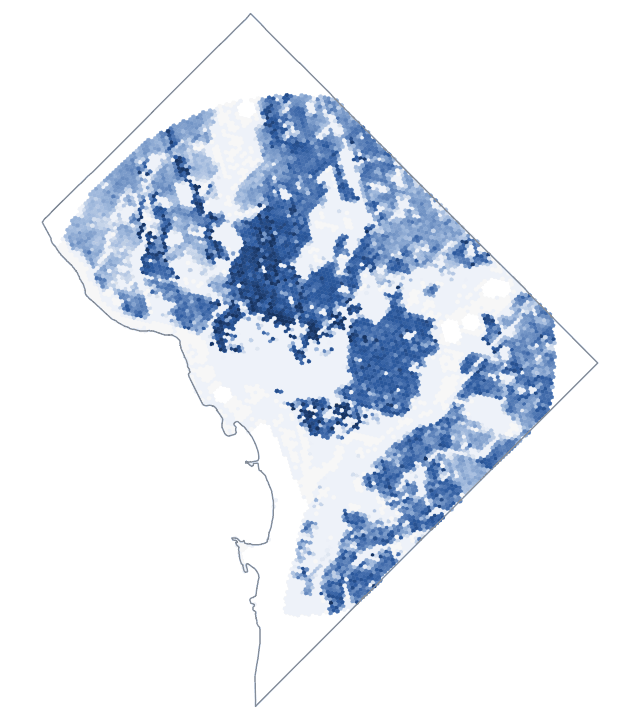
Households
Occupied homes. Most burglaries target homes, so burglary is measured per household. Burglary of a business is counted per 100 businesses, and its score uses the household measure, like all burglary.
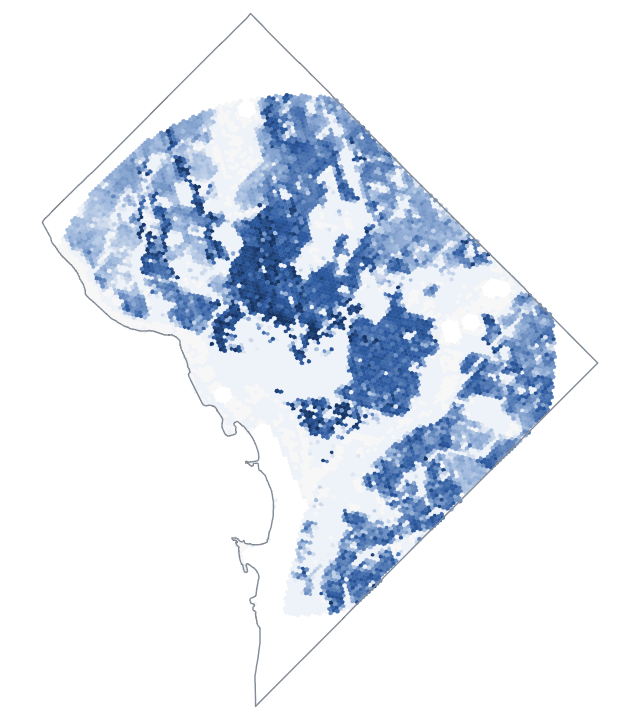
Housing units
Homes, occupied or empty. Arson of a business is counted per 100 businesses, and its score uses the housing-unit measure, like all arson.
Housing units and businesses
Vandalism strikes homes and businesses alike, so its yardstick counts both.
Public person-hours and parking spaces
Theft takes from people and from cars, so its yardstick blends the two, about 64% people and 36% vehicles nationally. Theft from businesses is measured per 1,000 square feet of commercial floor area, and shoplifting per 1,000 square feet of retail floor area.
Which number to use when
Yearly counts in the rings
How much crime the 1-, 3- and 5-mile rings hold in a year. Counts size patrols and guard coverage.
Scores for each crime
Each crime on its ideal denominator, on one national 0 to 1000 scale. A score means the same level of risk in a city center and a rural county.
Store scores
A business compared with the typical store of its type, where 100 is typical and 200 about twice the incidents.
Every crime and its yardstick
The full list, with each measure's unit, is on the Data definitions page.
| Crime | Measured against | Why it fits |
|---|---|---|
| Murder, rape and sexual assault, aggravated and simple assault | Person-hours | Violence follows where people are, at any hour |
| Robbery of people | Public person-hours | Street robbery happens away from home |
| Robbery of businesses | Businesses | Each business is a target |
| Burglary | Households | Most burglaries target homes |
| Theft | Public person-hours and parking spaces | Theft takes from people and from cars |
| Shoplifting | Retail floor area | Shoplifting follows the size of the sales floor |
| Vehicle theft | Open parking spaces | The risk to a car follows the cars parked nearby |
| Arson | Housing units | Counts the homes at risk, occupied or empty |
| Vandalism | Housing units and businesses | Vandalism hits homes and businesses alike |